
How Gut Bacteria Differ Between Western and Indigenous Cultures and Why It Matters
by Anna Sandhu | Jun 23, 2025
Reviewed by Dr. Arun, M.Pharm., PGDRA, Ph.D.
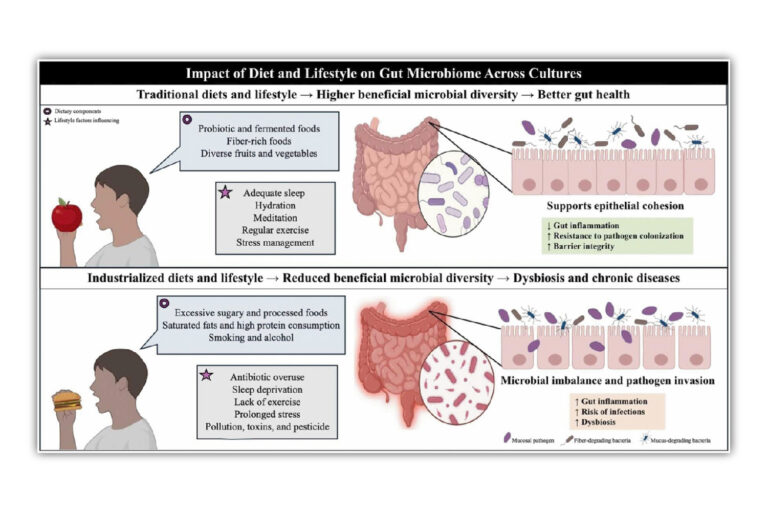
This study compared the tiny living things inside our guts (called the “gut microbiome”) in people from Western cultures and in people from Indigenous cultures. The goal: to learn how diet, lifestyle, and environment might affect gut bacteria, and how that might link to health and disease.
Researchers found that people in Indigenous cultures, who often eat more plants, fibre, less processed food, and live more traditional lifestyles, tend to have more diverse and richer gut bacterial communities than people in very Westernised settings.
Here are some key findings:
- Indigenous groups often eat high-fibre, plant-based or mixed traditional diets. These lend food to many types of gut bacteria, especially ones that help break down fibre and support good gut health.
- By contrast, Western diets tend to be higher in processed foods, sugar, fats, less fibre. These patterns are linked to fewer kinds of gut bacteria, and sometimes more of the bacteria that are tied to inflammation or disease.
- Because of the differences in gut microbiome, the study suggests this may partly explain why rates of some chronic diseases (like obesity, diabetes, inflammatory conditions) differ between traditional and Westernised communities. The microbiome is one piece of the puzzle.
- The authors emphasise that genes, environment, culture, diet and lifestyle all interact. It is not just “good bacteria vs bad bacteria” but a complex web. Indigenous populations may have gut microbial patterns adapted to their traditional diets and conditions. Westernisation (changing diet and lifestyle) may disrupt those adapted microbial communities.
What does this mean for you? Even though you may not live in an Indigenous community, this research suggests the quality and diversity of your gut microbiome matter. Eating more whole, fibre-rich foods, reducing highly processed items, and keeping lifestyle factors (sleep, movement, stress) balanced can help support a healthier gut ecosystem.
But: the authors stress that this is not a magic fix. Changing gut bacteria doesn’t automatically change health outcomes overnight. It’s about long-term habits and bigger context (diet, culture, environment). Also, the study calls for more research across many populations to fully understand how culture-diet-microbiome links work.
In short: Our gut bacterial communities are shaped strongly by what we eat and how we live. The study shows that Western lifestyles tend to reduce gut microbial richness compared to Indigenous (traditional) lifestyles—and that this change may influence our health. Paying attention to your gut health by what you eat and how you live is a smart move.
More Information: Comparative study of the gut microbiomes between Western and Indigenous cultures – Implications for health and disease. DOI: https://doi.org/10.1016/j.microb.2025.100310