
Gut Transit Time: The Missing Key to Understanding Your Microbiome
by Anna Sandhu | May 26, 2025
Reviewed by Dr. Arun, M.Pharm., PGDRA, Ph.D.
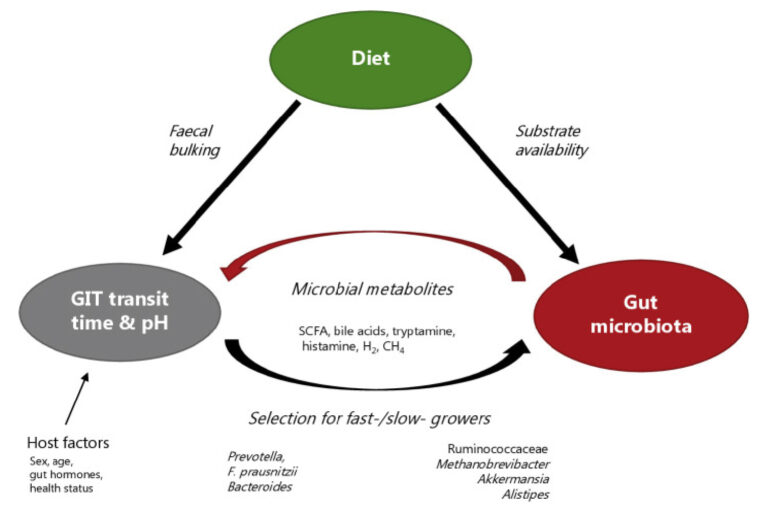
The article looks at how long it takes for food to travel through different parts of our gut called gut transit time and how that affects the many tiny microbes living in our intestines (the gut microbiota). Many studies look at diet or microbes; transit time is often ignored. Yet it may explain a lot of the differences we see between people’s gut microbes.
How gut transit time varies and why it matters
Gut transit time means how long food takes from when you swallow to when you pass stool. It can vary a lot between people and even for the same person on different days.
This matters because:
- If food moves slowly, bacteria in the colon have more time to change what’s in the gut, break down more stuff, and shift how they act.
- If the transit is fast, there’s less time for changes and different bacteria may dominate.
- These changes affect pH, moisture, what nutrients are available, and how microbes feed. All these shapes which bacteria thrive.
What the research found
- Researchers found that transit time is a top driver of variation in gut microbiota
- Longer transit time has been linked with more “proteolytic” microbial activity (breaking down proteins) rather than “saccharolytic”, which can produce less beneficial by-products.
Key Take-aways
- Gut transit time really matters for how your gut microbes live and what they do.
- Two people eating the same food could have very different gut microbial outcomes, partly because their transit times differ.
- Longer transit time tends to shift microbes toward breaking down proteins and making by-products that may be less healthy.
- When scientists study diet, microbes, health and disease, they should include transit time as an important factor.
- For everyday health thinking about how well your gut moves (bowel habits, stool changes) might help your gut microbiota stay in a healthier state.
Final Thoughts
One of the “hidden” factors in gut-microbiome health is how fast or slow things move in your gut. It’s not just what you eat or which microbes you have it’s also how long they live in your gut environment and how that environment changes. For you, this means that paying attention to your bowel habits, stool consistency, gut comfort and regularity can be just as important as diet when thinking about gut health.
More Information: Advancing human gut microbiota research by considering gut transit time. DOI: https://doi.org/10.1136/gutjnl-2022-328166